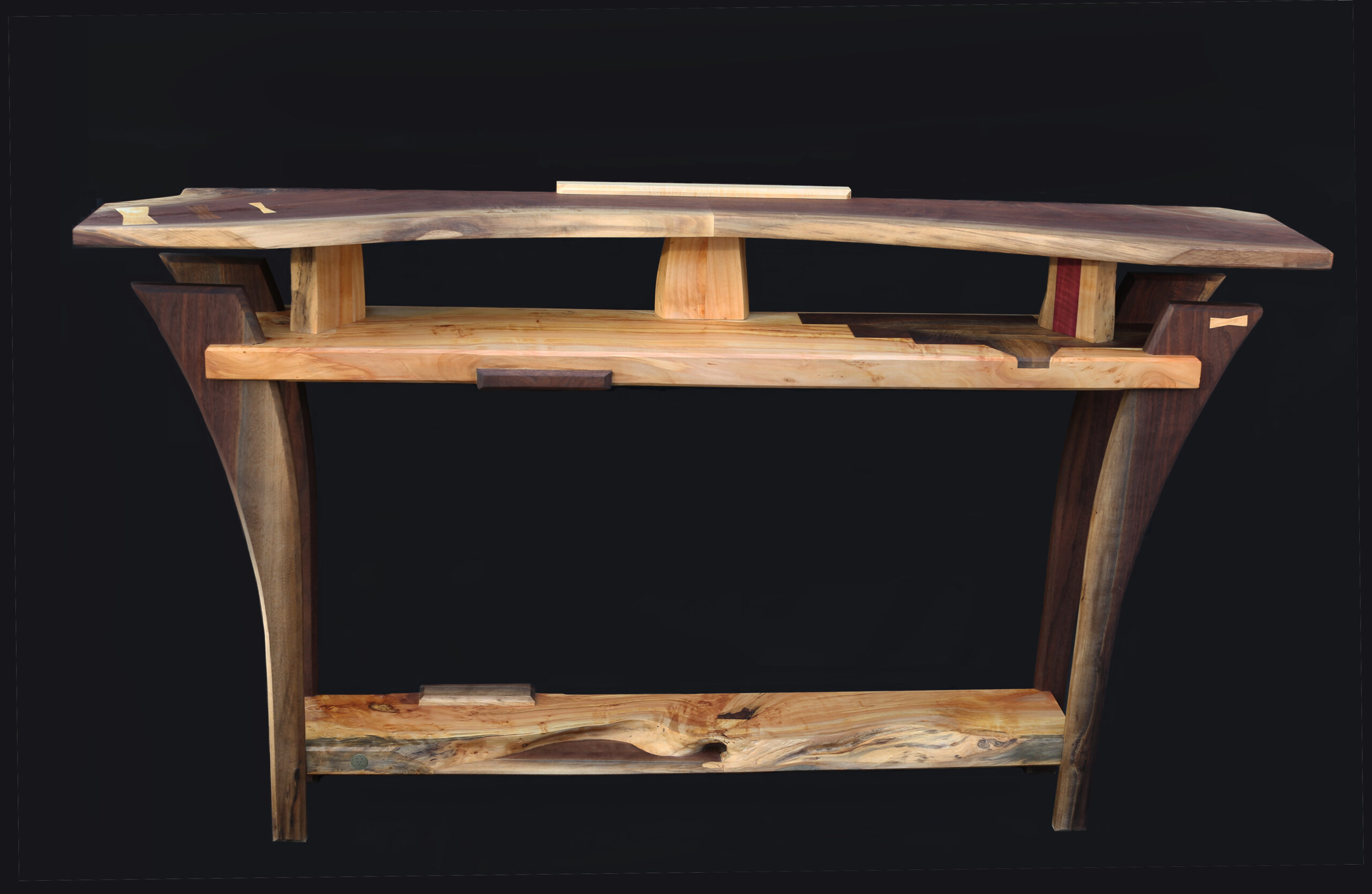
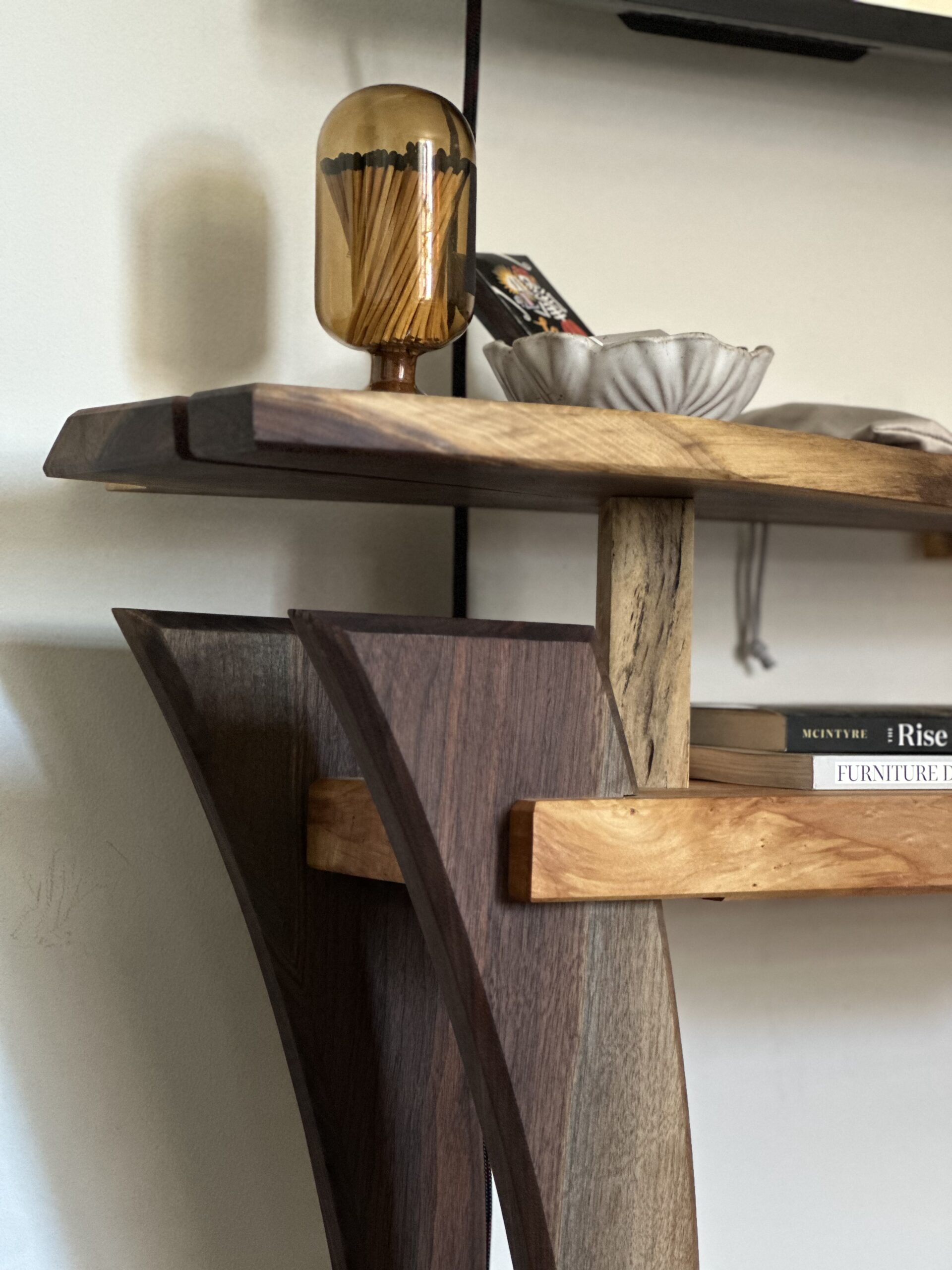
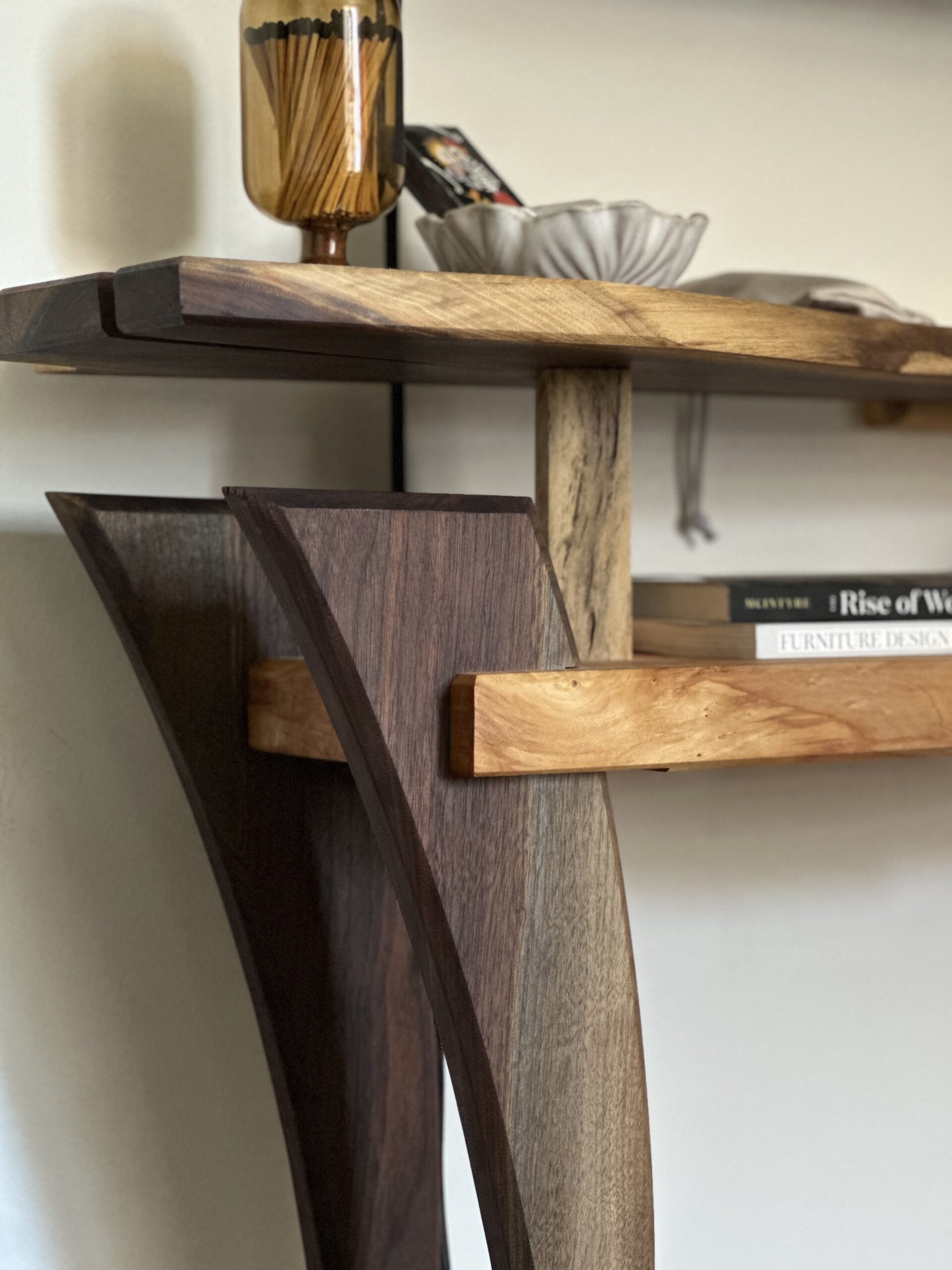
This console table represents one of the most ambitious and time-intensive pieces created in the Wabi-Lynn studio, requiring well over 120 hours of design and craftsmanship. It is also the only piece in the collection that has earned a name: Emergence. The title reflects both the process and philosophy behind the work—the gradual revealing of form, character, and beauty from materials that initially appear chaotic or imperfect.
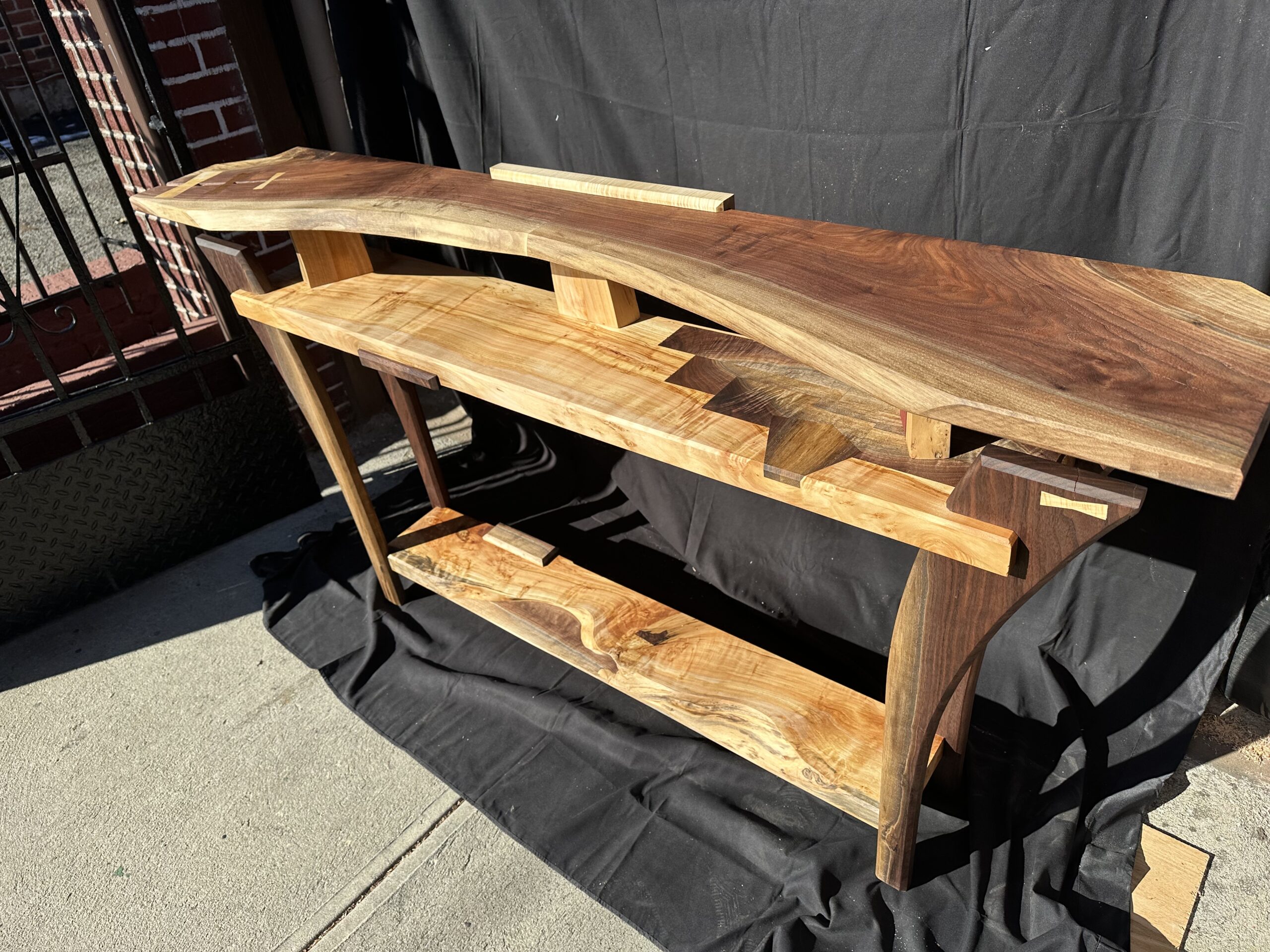
Built from figured walnut, maple, and purpleheart, the piece was conceived as a layered composition where each tier contributes its own visual language while remaining part of a unified architectural form. The overall silhouette follows a gentle curvature derived from the golden ratio, giving the table a sense of movement and balance while maintaining a refined, understated elegance.
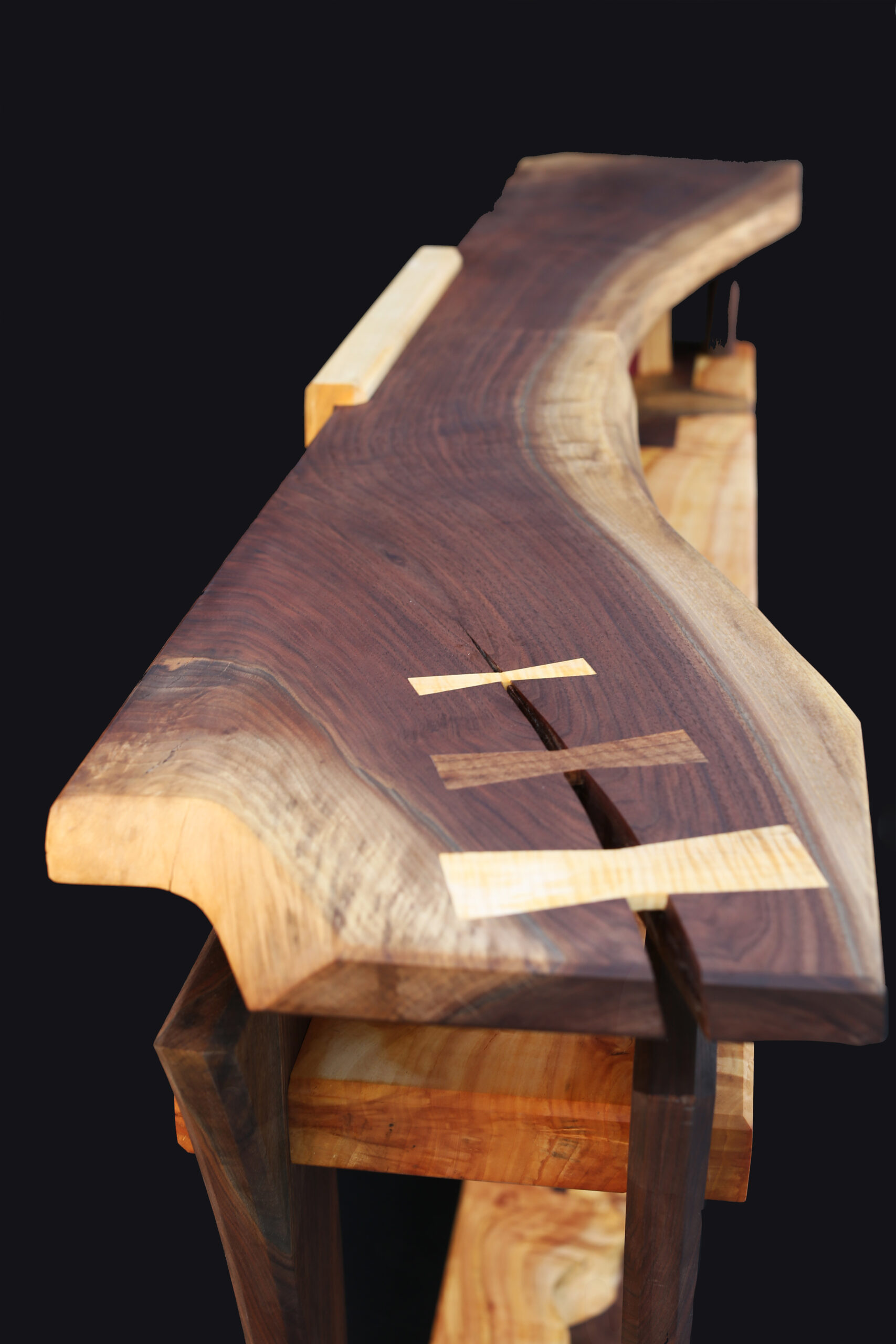
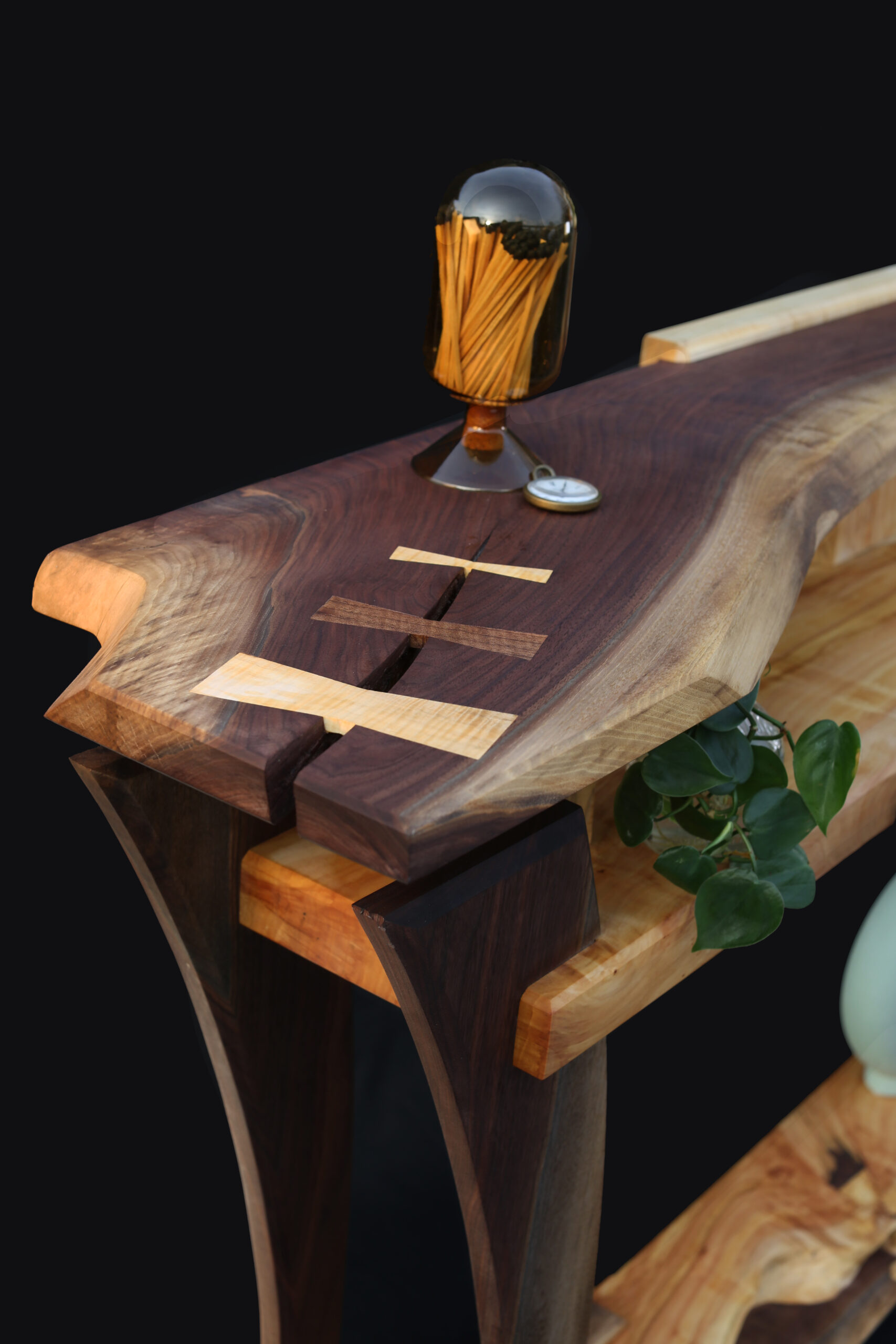
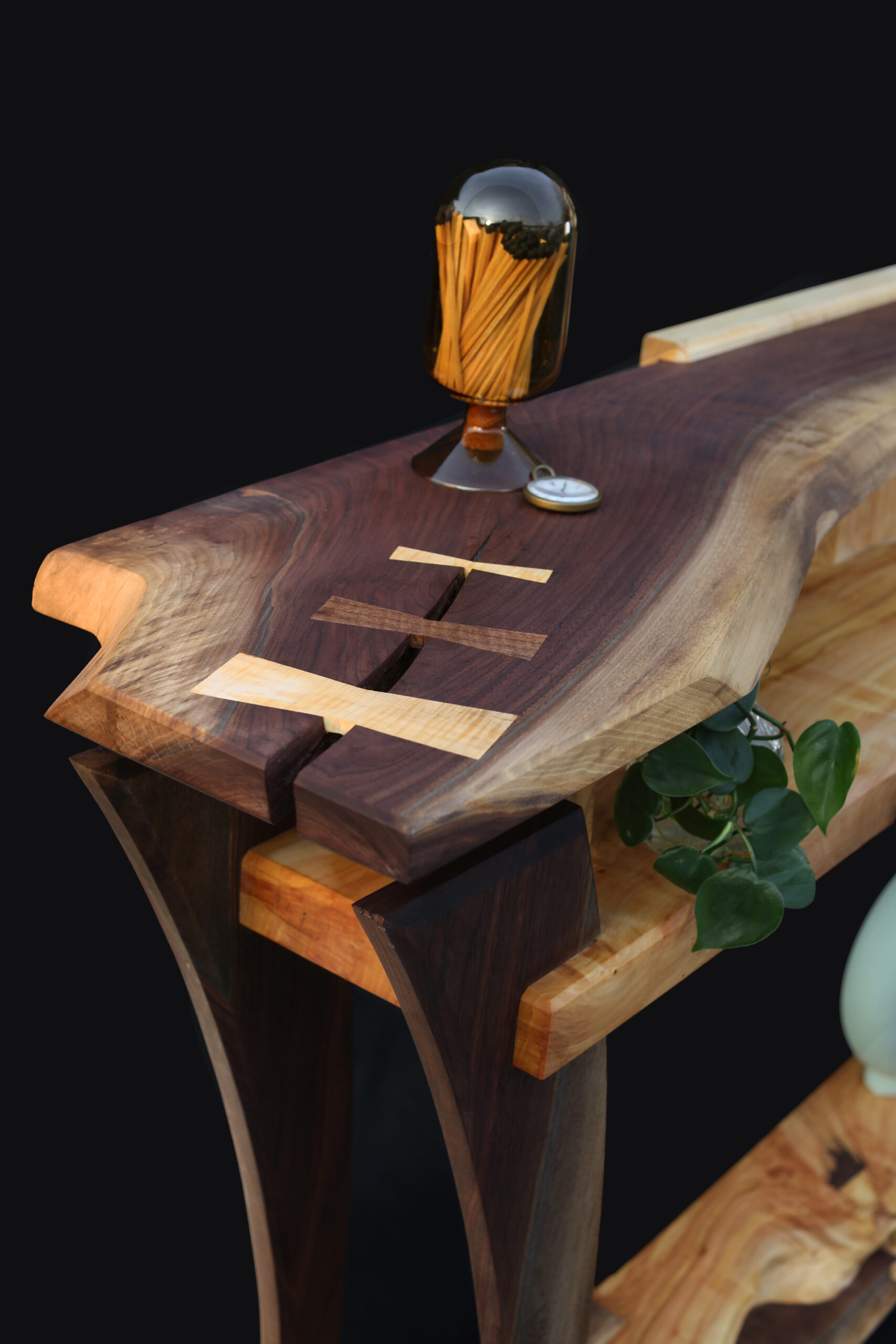
The top tier is formed from a walnut crotch slab that was carefully ripped and rejoined in a mirrored orientation, creating a dramatic bookmatched grain pattern. The sapwood was intentionally preserved, allowing the walnut to transition naturally into the lighter tones of the maple used throughout the rest of the piece. A large natural split is stabilized by three bowtie inlays arranged in a deliberate rhythmic sequence: curly maple at the largest and smallest positions, with curly walnut at the center. Together they reinforce the structure while becoming a defining visual motif of the piece.
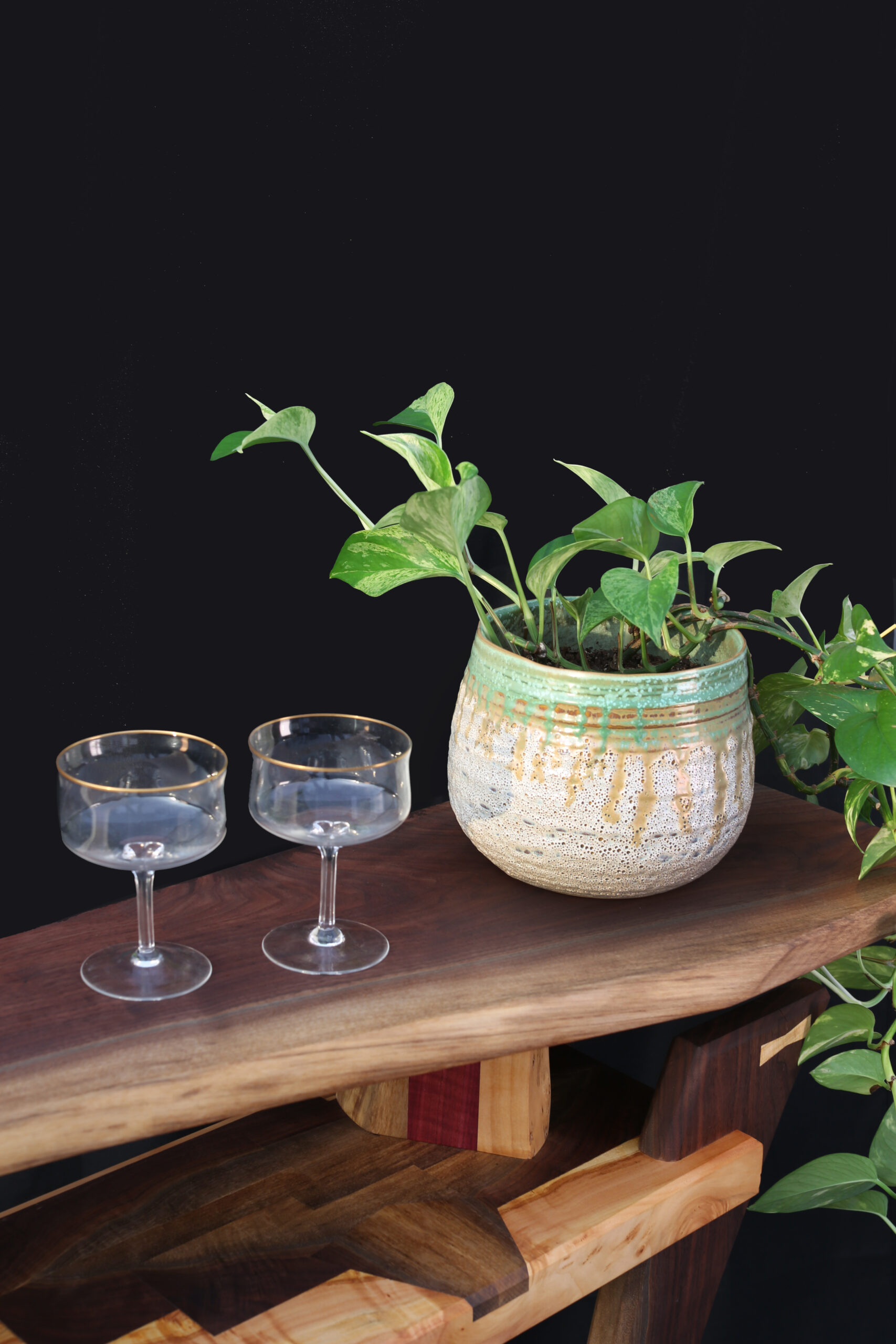
The middle tier introduces a different visual language through a series of overlapping patchwork inlays crafted from highly figured walnut. Each segment was carefully planned and fitted to create a flowing composition rather than a purely structural repair. Within this tier sits a distinctive walnut “button” inlay, used to replace a natural defect in the slab. The button is intentionally left slightly proud of the surface, acting as a quiet acknowledgment of imperfection and intervention within the material.
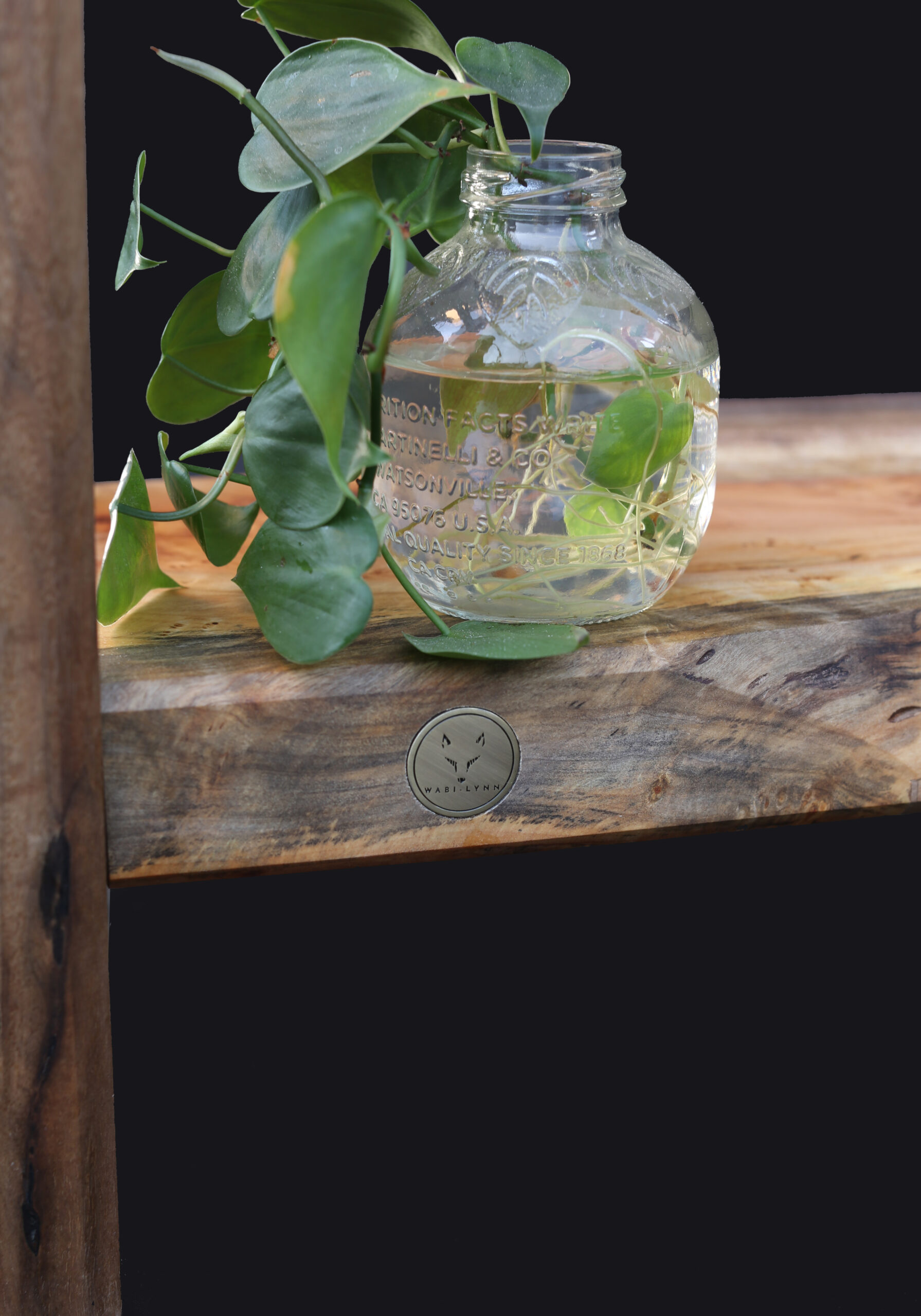
The lower tier echoes this concept with a second button inlay, again replacing a natural void. Here, however, the inlay intentionally interrupts usable surface area—a deliberate design decision that prioritizes expression over strict functionality. This tier also features a distinctive “tier within a tier,” where a walnut insert follows a natural contour of the maple slab, filling the void while expanding usable surface area and introducing another layer of visual contrast. As with the upper elements, sapwood transitions were intentionally positioned to create harmony between the different species.
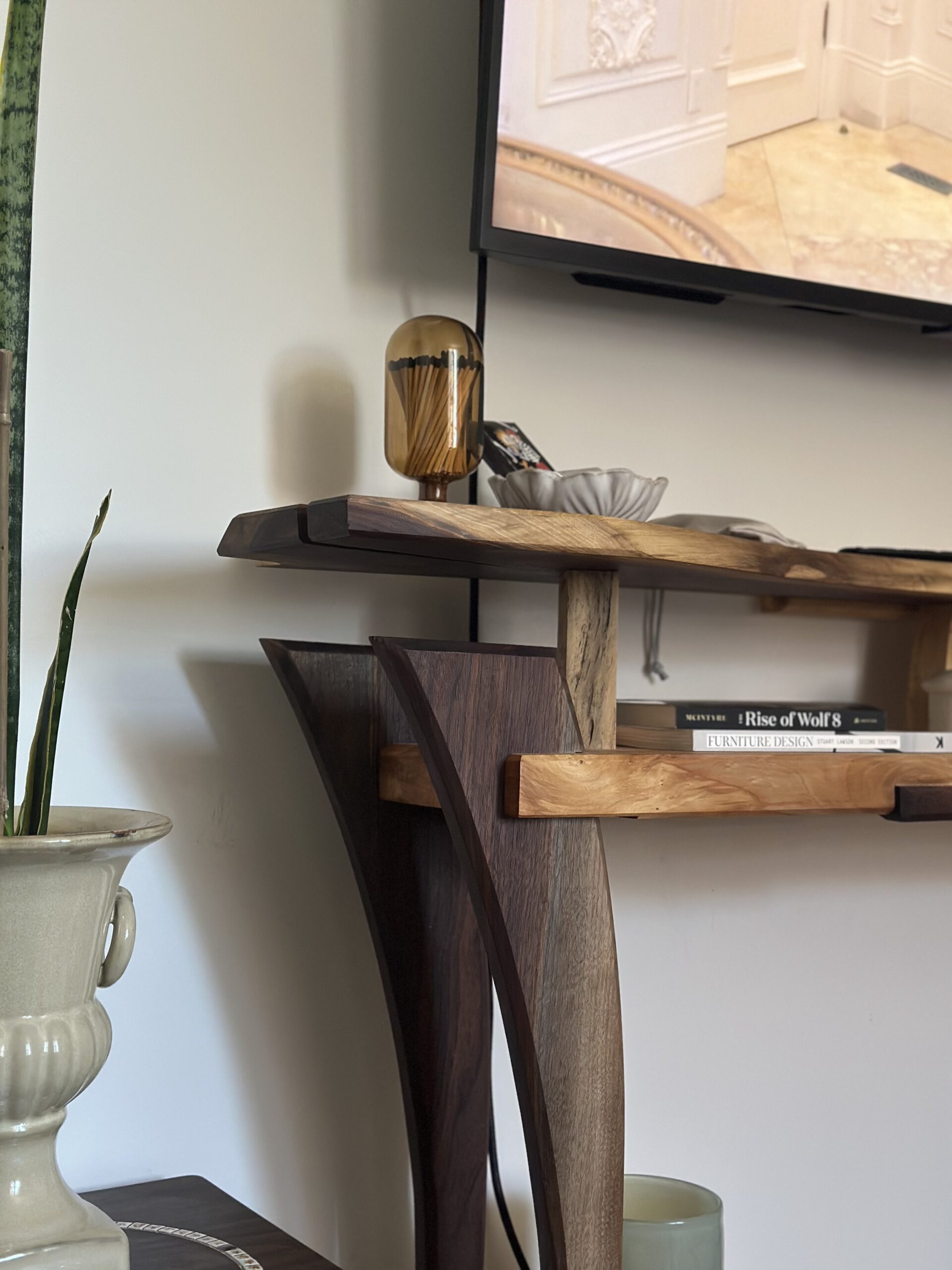
The structural framework reinforces the layered design of the piece. The bottom and middle tiers are connected by sculpted walnut legs whose grain and sapwood transitions were deliberately oriented to complement the surrounding materials. One of these legs contains a maple bowtie stabilizing a natural crack, continuing the theme of structural honesty. The middle and top tiers are supported by three live-edge uprights—two maple and one composed of maple, purpleheart, and walnut—which introduce additional rhythm and color variation while visually separating the tiers.
The smaller uprights connecting the middle and top tiers are joined with floating tenons, while the larger walnut legs join the slabs through carefully fitted housed joinery that locks the tiers into the frame while allowing the organic edges to remain visually dominant. The front edges of the top and bottom tiers retain their natural contours, reinforcing the organic character of the slabs, while the remaining edges are refined with subtle chamfers that bring clarity and definition to the overall form.
The result is a piece that balances structure and spontaneity—where natural imperfections, deliberate repairs, and refined craftsmanship coexist within a carefully composed architectural silhouette.